When the Machine Shrugs: What Happens When Recommendation Engines Run Out of Answers
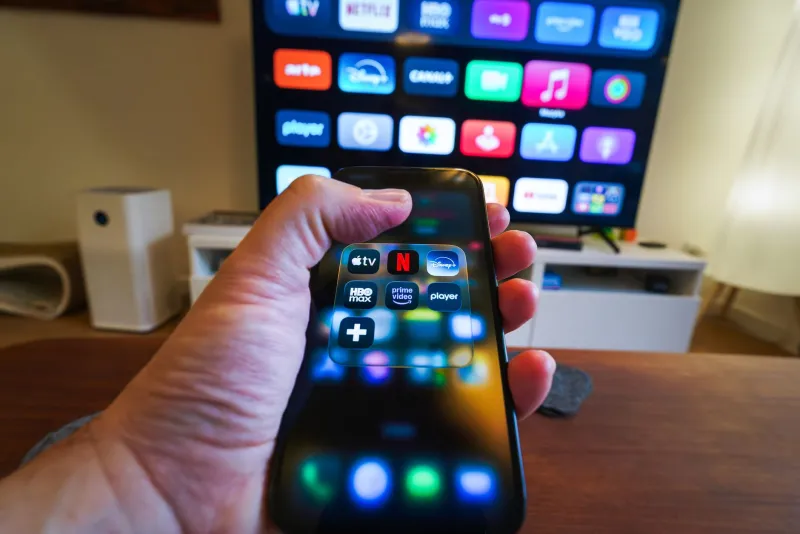
Here's a scenario that probably sounds familiar. You open up Netflix, Spotify, YouTube — take your pick — and you're greeted by a wall of suggestions that are technically perfect for you. The algorithm has done its homework. It knows you watched that true crime docuseries at 1 AM three Tuesdays in a row. It clocked the way you lingered on that indie drama before chickening out and rewatching The Office for the fourth time. It has receipts.
And yet, somehow, none of it sounds right. You scroll. You sigh. You maybe open a second app hoping that one will have the answer. It doesn't. So you either settle or give up entirely.
This is not a you problem. This is the algorithm's problem — and it's a bigger deal than most people realize.
The Feedback Loop Nobody Asked For
Recommendation systems are built on a pretty elegant premise: track what people engage with, find patterns, surface more of the same. Over time, the system gets sharper. It learns your moods, your genres, your guilty pleasures. It can predict your behavior with genuinely impressive accuracy.
But here's the catch. These systems are optimized around past behavior. They're essentially building a portrait of who you were the last hundred times you opened the app. That portrait might be accurate, but it's also static in a way that real human taste simply isn't.
People change. Sometimes gradually, sometimes overnight. You go through a breakup and suddenly your carefully curated chill playlist feels insufferable. You hit a weird patch of curiosity and want to watch something completely outside your usual lane. Or — and this is the one that really breaks the machine — you genuinely don't know what you want. You just know it isn't this.
Algorithms have no idea what to do with that.
The Discovery Problem
There's a term researchers and product designers throw around called the "filter bubble" — the idea that personalization systems gradually narrow your world down to content that confirms what you already like. It's been a talking point in tech circles for years, but the entertainment angle doesn't get enough attention.
Think about how you discovered your all-time favorite movie or album. Chances are it wasn't because an app served it up based on your listening history. Maybe a friend mentioned it randomly. Maybe you stumbled onto it flipping through channels at your parents' house. Maybe you picked it up because the cover was interesting and you had nothing else to do on a rainy afternoon.
That kind of accidental discovery — the kind that actually changes you — is almost impossible to engineer algorithmically. Because the system doesn't know what you don't know you want. It can only work with what you've already shown it.
Some platforms have tried to solve this with "discovery" features — Spotify's Discover Weekly, for instance, or the way TikTok occasionally surfaces content that seems totally random. And those tools are genuinely useful sometimes. But there's a difference between introducing you to a new artist who sounds a lot like artists you already love, and dropping something in your lap that completely rewires how you think about music. The former is easy. The latter is basically a miracle.
What Happens When You're Genuinely Undecided
The existential crisis at the heart of modern recommendation AI isn't really about bad data or clunky code. It's philosophical. These systems are designed to minimize uncertainty — to make the best possible guess about what you'll engage with. But human desire is full of uncertainty. Sometimes that uncertainty is the whole point.
Being in a "I don't know what I want" mood is a real psychological state. Psychologists would probably call it something like exploratory openness — a headspace where you're primed for novelty and transformation rather than comfort and familiarity. It's actually a pretty valuable place to be. It's when people stumble onto new interests, new aesthetics, new parts of themselves.
Algorithms aren't built for that state. They're built to resolve it as fast as possible by defaulting to the safest, most statistically likely option. Which means they're actively working against the kind of discovery that tends to matter most.
The Exploitation vs. Exploration Tradeoff
In machine learning, there's a classic tension called the exploitation-exploration tradeoff. "Exploitation" means using what you already know to maximize reward. "Exploration" means taking risks on unknowns in hopes of finding something better. Most commercial recommendation systems are heavily weighted toward exploitation — because exploration is unpredictable, and unpredictability is bad for engagement metrics.
The business logic makes sense. If Spotify recommends something you hate, you might close the app. If it recommends something familiar and fine, you'll probably keep listening. Safe bets keep the session going. But safe bets also keep you in a box.
Some researchers have argued for building more exploration into recommendation systems — essentially programming them to take deliberate swings at content outside your established taste profile. A few platforms have experimented with this. The results are mixed, partly because users often say they want to be challenged but then punish the algorithm when it actually tries.
Which is maybe the most human thing of all.
What This Means for How We Consume Everything
Zoom out a little and this stops being just a streaming problem. The same logic applies to news feeds, shopping recommendations, social media, even dating apps. We've handed a lot of our decision-making over to systems that are excellent at giving us more of what we've already chosen — and pretty helpless when we're in the mood to become someone slightly different.
That's worth sitting with for a second. The tools we use to navigate culture are, by design, mirrors rather than windows. They reflect our past selves back at us with remarkable precision. What they can't do is point us toward a version of ourselves we haven't encountered yet.
None of this means algorithms are bad or that personalization is some kind of villain. It's genuinely useful most of the time. But it's worth being aware of the ceiling — the point at which the machine has learned everything it can about your patterns and is now just spinning its wheels.
The Human Workaround
Here's the thing: people haven't stopped finding transformative content. They've just started finding it around the algorithm rather than through it. Word of mouth is having a moment. "My coworker won't stop talking about this show" is doing a lot of heavy lifting right now. Substack newsletters, Discord servers, niche subreddits, group chats — these are all places where discovery still happens in the messy, unpredictable, deeply human way it always has.
Maybe that's the real answer. Not fixing the algorithm, but knowing when to put it down and ask an actual person what they've been into lately.
The machine is smart. But it still can't replicate the moment a friend says, "I think you need to watch this," and they're completely, inexplicably right.