Why Finishing a Great Series Feels Like Losing Something Real
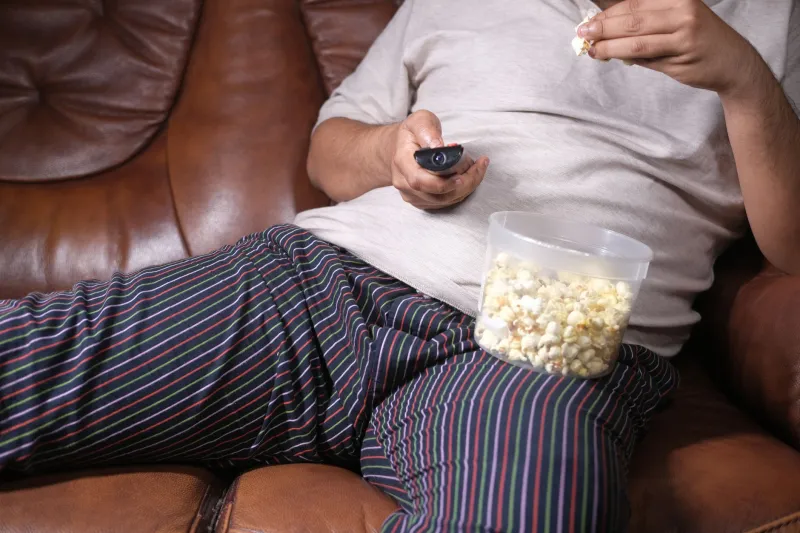
You know the feeling. It's Sunday night, the credits roll on the final episode, and instead of satisfaction, there's this strange, quiet emptiness sitting in your chest. You watched everything. You loved it. And somehow, you feel worse than before you started.
That's not a character flaw. That's your brain sending you a bill.
The Reward Loop That Streaming Broke
Human brains are wired around anticipation. Dopamine — the neurotransmitter everyone talks about when discussing addiction, motivation, or that rush from checking your likes — doesn't actually spike when you get the thing you want. It spikes in the buildup. The craving. The wait.
For most of television history, that wait was baked right in. You watched an episode of Breaking Bad or Lost, and then you had seven days to think about it, talk about it, rewatch that one scene, and build up a head of steam before the next one dropped. The anticipation was part of the experience. It was doing real neurological work.
Streaming gutted that. When Netflix drops an entire season at once — or when you've got the next episode auto-playing before you've even processed the ending of the current one — you're essentially skipping the recharge phase of the reward cycle. You're withdrawing from the account without letting any deposits accumulate.
The result? A kind of dopamine debt. You consumed a lot, but your brain never got to savor any of it.
Speed-Running Stories Wasn't What We Were Built For
Storytelling has always had a pacing problem — or rather, storytellers have always understood that pacing is the point. Ancient serialized fiction, the cliffhanger tradition in Victorian novels, weekly radio dramas, primetime TV — they all used time as a deliberate tool. The gap between installments wasn't dead air. It was emotional processing space.
When you compress that space to zero, something shifts. A study from the University of Michigan found that people who binge-watched TV shows reported lower levels of self-control and higher feelings of loneliness after viewing sessions compared to those who watched more moderately. That's not a coincidence — it's your nervous system flagging that something in the consumption pattern felt off.
Think about the last book that really wrecked you emotionally. Chances are you didn't read it in one sitting. You put it down, went to sleep, came back to it. Your brain had time to integrate what it was processing. Binge-watching collapses that integration window almost entirely.
The Compression of Emotional Stakes
There's another layer here that doesn't get talked about enough: when you watch eight hours of television in a day, the emotional stakes of individual moments get diluted.
A shocking character death in episode four hits differently when episode five is already loading. Your brain barely has time to register the loss before it's handed something new to track. Over a full binge session, you might experience what would have been — spread across months — a genuinely moving, even life-changing narrative arc. But compressed into a weekend, those same beats can feel muted. Processed. Like emotional fast food that filled you up without actually nourishing anything.
Streaming platforms have started to recognize this, which is why some shows — Andor, Severance, The Bear — have moved back toward weekly release schedules even when they're on streaming services. The creators know something the algorithm doesn't always account for: the space between episodes is where the meaning gets made.
You're Not Ungrateful — You're Overstimulated
It's easy to feel guilty about the post-binge crash. You just watched something incredible, made by talented people, and your emotional response is... blah? That feels wrong. Ungrateful, even.
But overstimulation is a real phenomenon. When you flood your reward system repeatedly without breaks, you temporarily raise the threshold for what registers as satisfying. It's the same mechanism behind why a really loud concert can make normal music sound quiet for a few hours afterward. Your baseline shifts.
This is also why so many people describe the post-binge feeling as "not knowing what to watch next" even when they have hundreds of options available. It's not a content problem. It's a sensitivity problem. Your reward system is temporarily recalibrated to expect intensity, and nothing on the browse screen looks like it'll deliver.
How to Actually Feel Good About What You Watch Again
None of this means binge-watching is evil or that you need to throw your TV out the window. But there are some surprisingly low-effort ways to recalibrate.
Give yourself a gap. Even a 24-hour break between episodes of a show you love can dramatically change how much you enjoy the next one. It sounds counterintuitive, but the anticipation does real work.
Talk about it with someone. The social processing that used to happen around the watercooler or in fan forums between weekly episodes serves a genuine psychological function. When you share reactions, you're extending and deepening the emotional experience rather than just moving past it.
Resist the autoplay. That ten-second countdown to the next episode is one of the most effective pieces of UX ever designed — and it's designed entirely for the platform's benefit, not yours. Turning off autoplay puts a tiny but meaningful pause back into the process.
Revisit something old. Rewatching a show you already love doesn't spike dopamine the same way new content does, but it also doesn't demand the same processing load. It's the entertainment equivalent of comfort food, and sometimes that's exactly what a burned-out reward system needs.
The Irony at the Center of Infinite Content
Here's the thing that streaming platforms won't tell you in their quarterly earnings calls: the more frictionless they make the viewing experience, the less memorable any individual piece of content becomes. The ease of access is also, paradoxically, what cheapens the experience.
When you had to wait a week for a new episode, that episode mattered more. When you had to drive to Blockbuster and hope your movie was in stock, actually getting it felt like an event. Scarcity created meaning. Infinite access, it turns out, creates a kind of ambient meaninglessness.
You're not broken for feeling empty after a binge. You're just experiencing the predictable output of a system that was optimized for watch time, not wellbeing. The good news is that your brain is remarkably good at recalibrating — you just have to give it a little room to breathe.
Maybe the most radical thing you can do in the age of everything-available-always is choose to wait.